


About the Office
The Enterprise Architecture Office strives to achieve the vision, mission, and strategic objectives of Prince Sattam Bin Abdulaziz University by aligning the university’s operations with information technology. This alignment is carried out in accordance with global standards and policies, supported by effective governance that ensures the quality and accuracy of delivering digital services across the university.



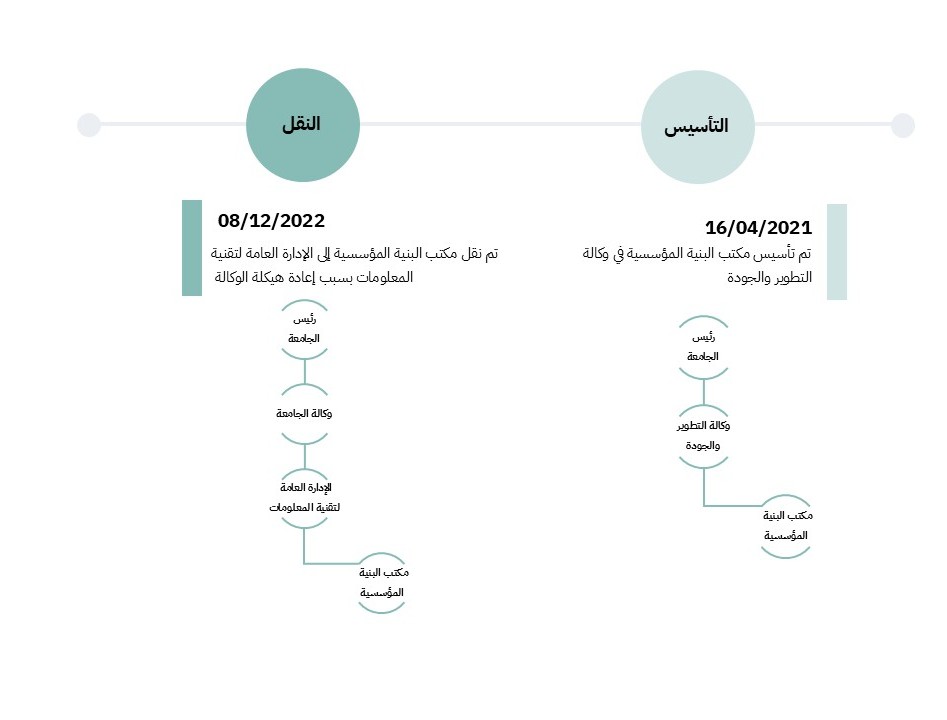
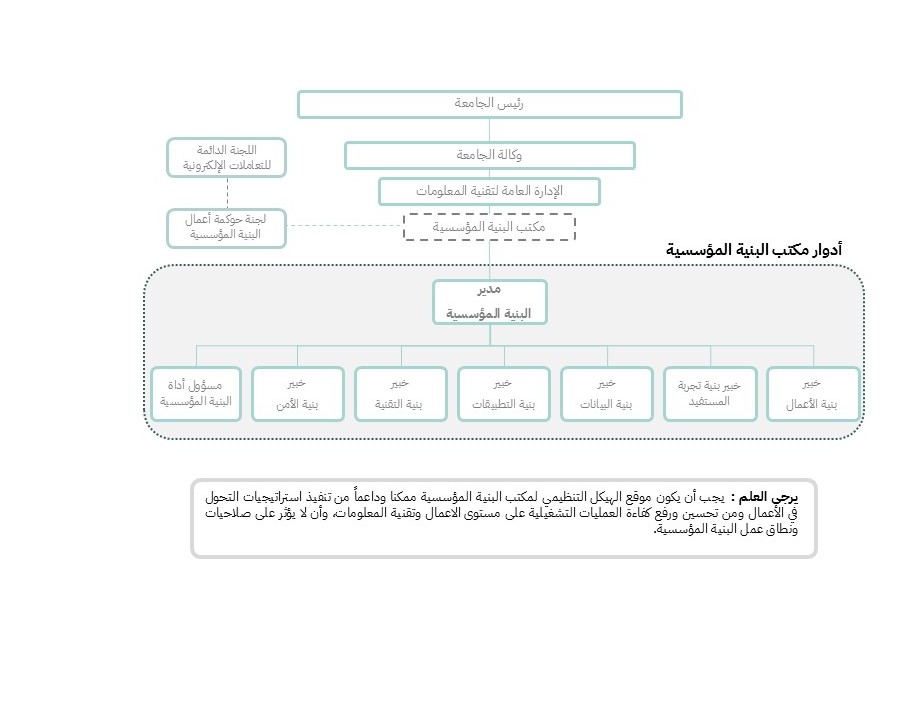
The Enterprise Architecture Office is organizationally affiliated with the General Administration of Information Technology. However, its tasks, services, and operations—including governance and performance monitoring—are subject to the oversight and supervision of the Enterprise Architecture Governance Committee.
The following diagram illustrates the position of the Enterprise Architecture Office within the organizational structure, along with the defined functional roles that constitute the Enterprise Architecture Office, all of which report to the Enterprise Architecture Director.
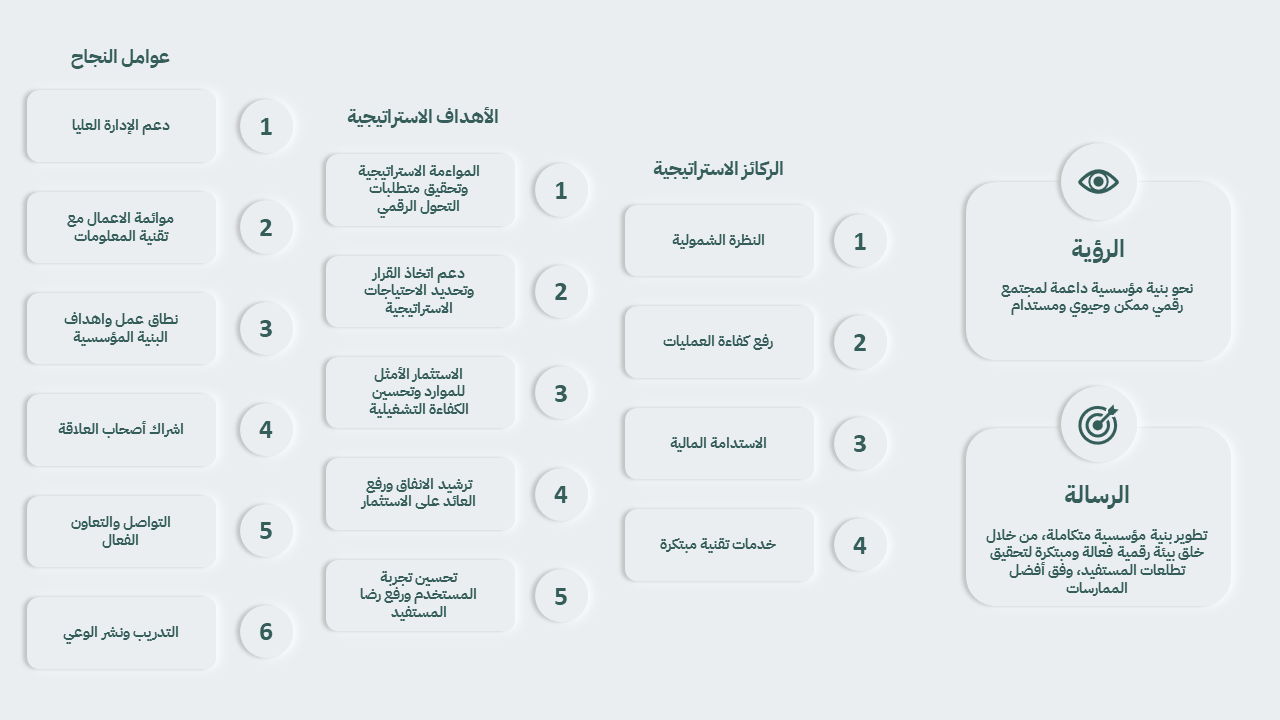
Vision
Towards an enterprise architecture that supports an empowered, vibrant, and sustainable digital society.
Mission
To develop an integrated enterprise architecture by creating an effective and innovative digital environment that fulfills stakeholder aspirations in line with best practices.
Strategic Pillars
- Holistic Perspective
- Enhancing Process Efficiency
- Financial Sustainability
- Innovative Technology Services
Objectives
- Strategic alignment and fulfillment of digital transformation requirements
- Optimal resource utilization and improved operational efficiency
- Supporting decision-making and identifying strategic needs
- Rationalizing expenditure and increasing return on investment
- Enhancing user experience and improving stakeholder satisfaction
Core Tasks
These are the primary work activities directly linked to the objectives defined for the Enterprise Architecture practice. They include the essential responsibilities required to activate the expected role of the practice within the organization, in alignment with its goals and expectations:
- Develop and update the Enterprise Architecture strategy, including vision, mission, objectives, and roadmap.
- Ensure alignment of the Enterprise Architecture strategy with other organizational strategies, while prioritizing digital projects and initiatives based on continuous analysis of the current and future states.
- Develop the roadmap based on gap analysis between the current and target architecture, identifying initiatives required to achieve the future state.
- Manage, document, and update components of Business Architecture, Application Architecture, Data Architecture, Technology Architecture, Security Architecture, and Experience Architecture, while identifying continuous improvement opportunities for each component based on ongoing assessments.
- Ensure compliance with national Enterprise Architecture principles and standards to enhance the maturity of the practice.
- Support decision-making by providing a comprehensive view to decision-makers based on Enterprise Architecture reports covering all aspects (services, systems, infrastructure, resources).
- Ensure and support change management during the implementation of digital projects and measure its impact on the Enterprise Architecture practice.
- Analyze risks related to Enterprise Architecture and develop strategies to address potential risks through proactive and corrective solutions.
- Provide consultations and guidance on decisions related to Enterprise Architecture practices and related domains, as well as advisory support to organizational units in relevant areas.
- Monitor the integration of various technical systems with the Enterprise Architecture to ensure harmony between current and future systems.
- Study and analyze business services, document processes, and align business operations with technology.
- Contribute to improving spending efficiency across university sectors by leveraging technology to enhance business efficiency and increase productivity.
- Manage Enterprise Architecture requirements by collecting, documenting, and analyzing needs from different departments, ensuring alignment with architecture models and components to achieve integration and avoid conflicts between digital initiatives.
Supporting Tasks
These are work activities that facilitate or enable the team within the organization to execute the defined core tasks effectively. They include:
- Responsibilities related to managing the internal operations of the practice and ensuring effective execution of its activities.
- Support digital partnerships with external stakeholders, study emerging technologies in collaboration with experts, and identify technological opportunities that can be integrated into future projects to enhance innovation and achieve strategic objectives.
- Participate in drafting and reviewing technical specifications and requirements for IT projects launched by the university, and evaluate technical proposals to ensure compliance with Enterprise Architecture principles and standards.
- Review project deliverables to ensure compliance with approved designs and technical readiness before launch, then monitor and evaluate results post-implementation by measuring goal achievement and analyzing impact to ensure quality execution and continuous improvement.
- Promote Enterprise Architecture culture through ongoing awareness, effective communication, and organizing regular training programs.
- Analyze the current state of electronic services provided by the organization and identify improvement opportunities by assessing the current situation, evaluating user satisfaction, and identifying operational or technical gaps.
- Review exception requests for developing or automating electronic services outside the roadmap, ensuring responsiveness to changes while adhering to Enterprise Architecture standards and practices.
The Enterprise Architecture Strategy primarily relies on the National Enterprise Architecture Methodology (NORA), the national framework endorsed by the Digital Government Authority (DGA), to organize Enterprise Architecture practices in a manner that reflects the university’s business and IT reality and advances its objectives. The strategy will also leverage other methodologies, such as TOGAF.
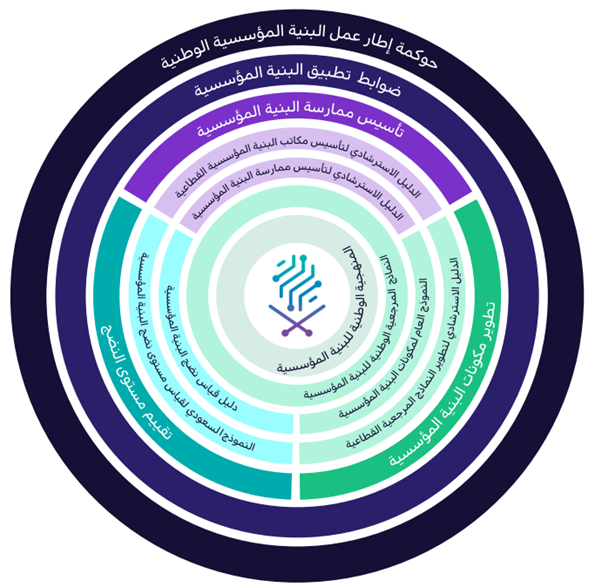
- Define the scope and requirements of Enterprise Architecture within government entities.
- Support government entities in implementing Enterprise Architecture smoothly and effectively.
- Ensure the efficiency and quality of Enterprise Architecture and its deliverables within the government entity through consistent processes and recommendations.
- Align the government entity’s Enterprise Architecture directions and objectives with the National Enterprise Architecture and national execution plans to support a broader government-wide digital transformation.
- Facilitate the adoption of Enterprise Architecture and enhance awareness and capacity-building across government entities.
| Service | Service Description | Service Category |
|---|---|---|
| Consultation Request | A service aimed at providing technical and organizational advisory on Enterprise Architecture practices to support decision-making and ensure alignment of departments and plans with the university’s approved frameworks and models. | Core Service |
| Request to Develop an eService | A service aimed at enhancing service efficiency by improving existing e-services or designing new ones, to improve user experience and operational efficiency, and to define project requirements through a structured study focused on the current state and best practices. | Supporting Service |
| Content Request | A service to provide proposed institutional/technical content and support materials, by studying general technical content on how to integrate emerging technologies with national frameworks to support decision-making and determine technology solutions that fit the entity’s needs. | Supporting Service |
| Exception Request for eService Development | A service that processes exception requests related to acquiring, building, or providing e-services for a specific process within the entity and the university, by submitting a request for follow-up to the Enterprise Architecture Governance Committee. | Supporting Service |
| Review of Strategic Requirements | A service to review and analyze requirements of strategic projects within the entity—such as network, systems, strategic program management, and digital transformation—to ensure priority alignment with the approved enterprise architecture, and to identify technology risks and improvement opportunities for change management. | Core Service |
| Compliance Exemption Request | A service to handle special requests where meeting certain enterprise architecture standards/requirements is not currently feasible, by assessing impact, identifying compliance alternatives, and escalating the request to the committee for an appropriate decision in accordance with governance frameworks, while ensuring no conflict with roadmap initiatives and measuring strategic impact. | Supporting Service |
| Review and Evaluation of Project Execution Practices | A service to review RFPs/technical specifications for IT projects adopted by the entity, and to assess project deliverables to ensure technical readiness and compliance with approved designs prior to launch, followed by post-implementation evaluation to measure goal achievement, analyze impact, and ensure quality execution and continuous improvement. | Supporting Service |